Data Recovery Software Support
Get free technical support for Hetman data recovery software, whether you have already purchased a license or are still evaluating the software. Scan your storage and preview recoverable files for free before purchasing to make sure the data you need can be recovered. Get help with disks, RAID arrays, NAS devices, servers, virtual machines, and encrypted storage. Contact us 24/7, and we’ll respond within one business day.
Contact Form
Knowledge Base
Video Guides
-
What information should I provide when contacting data recovery support?
Describe what happened before the data became inaccessible and specify the Hetman Software product and version, operating system, storage device type and capacity, and file system if known. For RAID, NAS, or server storage, also provide the number of disks, their order, model and capacity, RAID level if known, controller or NAS model, failed or replaced disks, and screenshots of the current configuration or scan results. These details help our support team understand the storage layout and recommend the safest recovery procedure.
-
What should I do before starting data recovery?
Stop using the affected storage device as soon as possible. Do not install software, copy files, format partitions, initialize disks, or save recovered data to the same physical device. For failed RAID, NAS, or server storage, do not repair, resynchronize, or rebuild the array before the original configuration has been analyzed.
-
Can technical support help with RAID, NAS, and server data recovery?
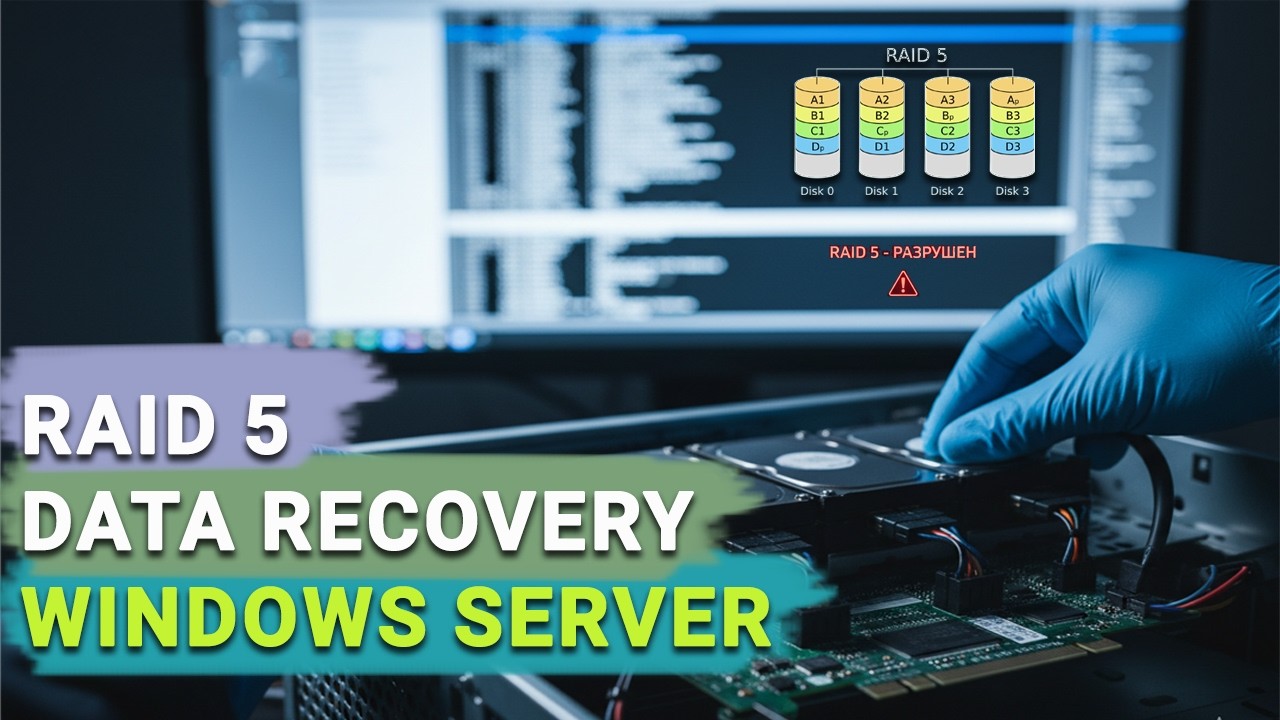
Yes. Hetman RAID Recovery supports hardware and software RAID, NAS devices, Windows and Linux server storage, Storage Spaces, MD RAID, LVM, ZFS, Btrfs, Unraid, and other multi-disk configurations. If automatic reconstruction does not produce the expected result, contact support and provide information about the original disks and storage configuration.
-
What if I don't know the original RAID configuration?
You do not necessarily need to know it. Hetman RAID Recovery can read available metadata from RAID member disks and determine parameters such as RAID level, disk order, stripe size, offsets, and parity layout automatically. If the metadata is missing or damaged, the program can search for possible configurations or the array can be defined manually with RAID Constructor.
-
Can I get help recovering virtual machines and snapshots?
Yes. Hetman software can work with virtual disks and snapshot chains from VMware, Hyper-V, VirtualBox, Proxmox, KVM/QEMU, Parallels, XenServer, and other supported virtualization platforms. Supported formats include VMDK, VHD/VHDX, AVHD/AVHDX, VDI, QCOW/QCOW2, RAW, HDD/HDS, and others.
-
Can support help with encrypted drives and encrypted files?
Yes. Supported encryption includes BitLocker, VeraCrypt, LUKS, FileVault, encrypted APFS and HFS+ volumes, Windows EFS, and Linux fscrypt. To unlock or decrypt protected data, the appropriate password, recovery key, certificate, keyfile, or other authentication information is required.
-
Can I recover data directly from a NAS or server without removing the disks?
In supported configurations, yes. If the NAS or server is operational and provides SSH access to its physical disks or other block devices, Hetman RAID Recovery can add them as remote storage sources and analyze them similarly to locally connected disks. Physical disks, disk images, virtual disks, and remote sources can also be combined in the same recovery configuration.
-
What should I do if the software cannot detect my storage or reconstruct it correctly?
Do not initialize, format, repair, rebuild, or modify the original storage. Contact technical support and provide information about the storage configuration, connected disks, operating system, and the results shown by the software. For RAID, NAS, server, or virtual storage, screenshots of the detected disk structure and reconstruction parameters can help our specialists identify the problem and recommend the next recovery steps.
-
Which file systems are supported for data recovery?
Hetman data recovery software supports the most common Windows, Linux, macOS, Unix, and server file systems, including FAT/exFAT, NTFS/ReFS, Ext2/3/4, XFS, Btrfs, APFS, HFS+, ZFS, UFS, VMFS, and others. Support also extends to file systems used inside RAID arrays, NAS devices, servers, virtual disks, and disk images.
-
What should I do if a drive has bad sectors, read errors, or disconnects during recovery?
Stop scanning the affected drive if it becomes unstable, reports read errors, disconnects, or responds slowly. If the device is still readable, create a sector-by-sector disk image and continue the recovery from the image instead of the original drive. This reduces repeated access to unstable media and preserves its current state. If physical damage prevents normal access to the device, professional hardware recovery may be required.