RAID 0 Data Recovery: Striped Storage Arrays

Explore RAID 0 data recovery, including stripe order and block size, missing partitions and recovery limitations when an array member fails.

How to recover data from mdadm-managed RAID 0, RAID 5, and RAID 6 arrays created on OpenMediaVault

In this article we will examine the process of data recovery from mdadm RAID 0, 5 and 6 arrays created in the OpenMediaVault 8.2.8 operating system. We will analyze the most common data loss scenarios: accidental file deletion via network protocols SMB, NFS or FTP, data corruption due to failure of one or more drives, server or NAS hardware failure, as well as software failures of the OpenMediaVault operating system caused by updates or critical bugs.

(more…)

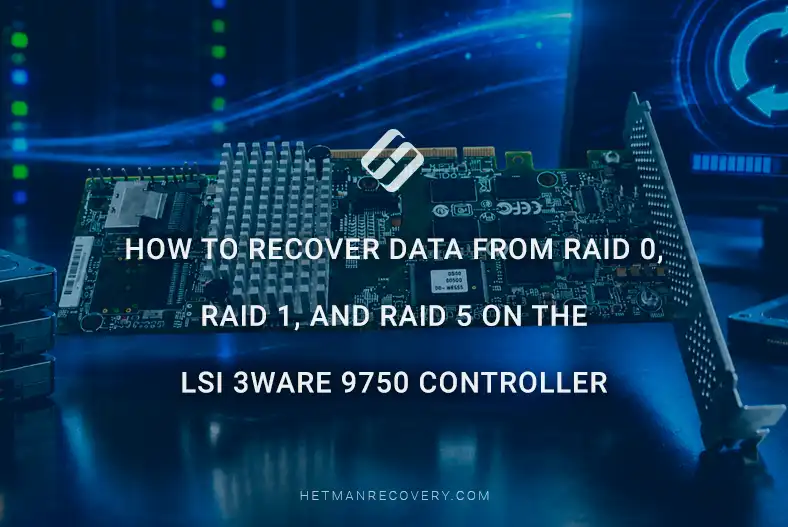
How to Recover Data from RAID 0, RAID 1, and RAID 5 on the LSI 3ware 9750 Controller

In this article we will review how to recover data from RAID arrays levels 0, 1, 5 and 10 created on the LSI 3ware 9750 controller. You will learn what to do if the RAID is no longer detected, an error occurred during array rebuild, the controller failed, or one or more drives are damaged.

(more…)

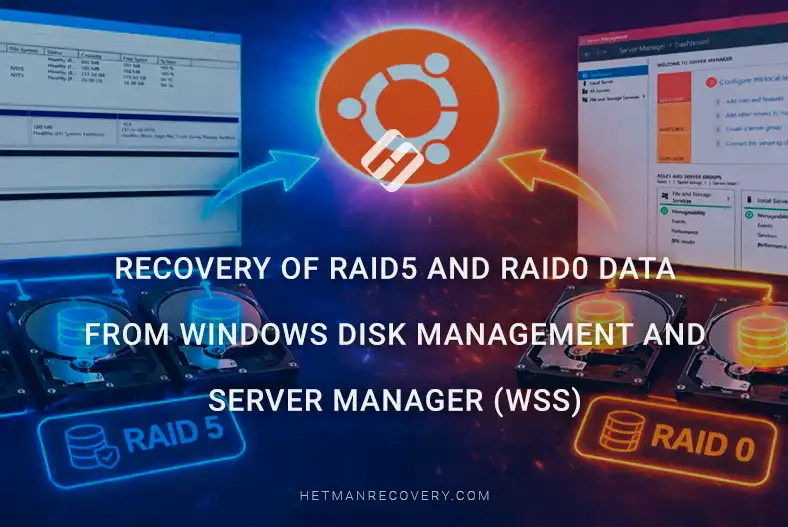
Recovery of RAID5 and RAID0 Data from Windows Disk Management and Server Manager (WSS)

In this article we will examine how to perform data recovery from software RAID 5 and RAID 0 created using the Windows Storage Spaces and Windows Disk Management tools in Windows Server 2012. You will learn how to quickly restore access to information if the server fails, one of the drives malfunctions, or the operating system stops recognizing the RAID array. We will review common failure scenarios and demonstrate effective data recovery methods in environments where arrays are used for critical tasks: database storage, server services, or virtualization platforms.

(more…)

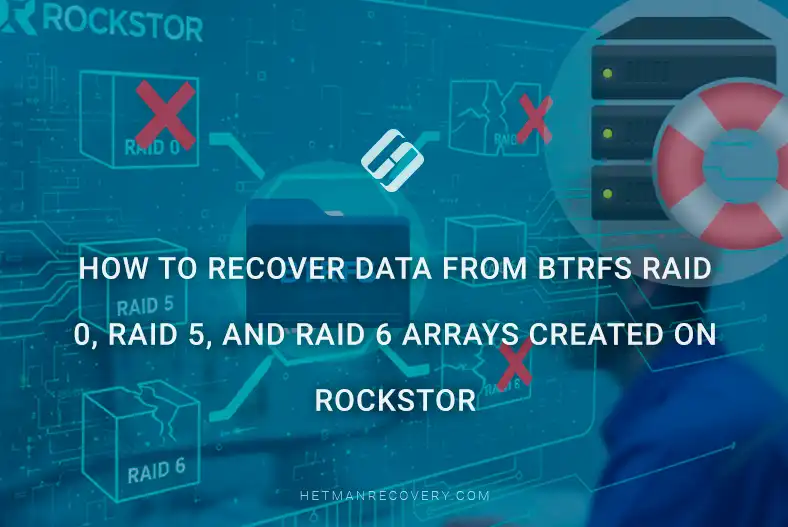
How to recover data from Btrfs RAID 0, RAID 5, and RAID 6 arrays created on Rockstor

Read about data recovery from Btrfs RAID 0, 5 and 6 arrays created in the Rockstor 5.1 operating system based on OpenSUSE Leap. We will analyze scenarios of logical errors, including accidental file deletion via network protocols SMB/CIFS, NFS, SFTP, AFP, or cases where data has been severely corrupted. Special attention will be paid to hardware issues such as drive failures, server hardware or entire NAS failures, as well as Rockstor software faults after updates or accidental system-disk wipes.

(more…)